
Overview
Synopsis
Jesus Christ Superstar tells the story of biblical Jesus in the final days leading up to his crucifixion. A rock opera by Andrew Lloyd Webber and Tim Rice, the musical has no spoken dialogue and is sometimes considered a modern rock-opera. Loosely based on the Gospels, Superstar focuses on the personal conflicts between Jesus, his disciples, the people of Israel, and the leadership of Rome. Special attention is played to the relationship between Judas Iscariot and Jesus, as well as Jesus’ relationship with Mary Magdalene. The musical is unique among biblical retellings in that it focuses on both Judas’ struggle making the decision to betray Jesus and Jesus’ human psychology, fear, and anger in understanding and accepting his role as both leader and martyr.
The show is a product of its era, permeated with 1970’s rock, gospel, folk and funk themes, modern language and colloquialisms, and high-energy dance numbers.
Show Information
Context
Jesus Christ Superstar emerged in the late 1960s amid a cultural revolution, with rock music dominating youth culture and biblical stories being reinterpreted through modern lenses, influenced by the counterculture movement, Vietnam War protests, and a surge in religious skepticism. Andrew Lloyd Webber and Tim Rice, both in their early 20s, drew from the Gospels' Passion narrative but shifted focus to human psychology—particularly Judas's perspective—portraying Jesus as a charismatic but
to read the context for Jesus Christ Superstar and to unlock other amazing theatre resources!Plot
ACT ONE
In the rock musical Jesus Christ Superstar, Judas worries that Jesus' popularity has overshadowed, and put at risk, their mission. He expresses his concern that the Romans will retaliate, endangering them all, and accuses Jesus’ followers of being blinded by their enthusiasm ("Heaven on Their Minds"). The group ignores Judas’ concerns, and urges Jesus on to Jerusalem. Jesus resists, hinting that the future is already set. Mary tends to Jesus as he copes with his followers not
to read the plot for Jesus Christ Superstar and to unlock other amazing theatre resources!Characters
Showing 8 of 10 characters
Interactive Character Map
Visualize how the characters in Jesus Christ Superstar connect and drive the story.
Understand the relationships that shape the story of Jesus Christ Superstar
- See how characters connect at a glance
- Explore alliances, conflicts, and dynamics
- Dive deeper into each role
Character Portrayals
See StageAgent members who have performed roles in Jesus Christ Superstar.
Showing 8 of 72 portrayals






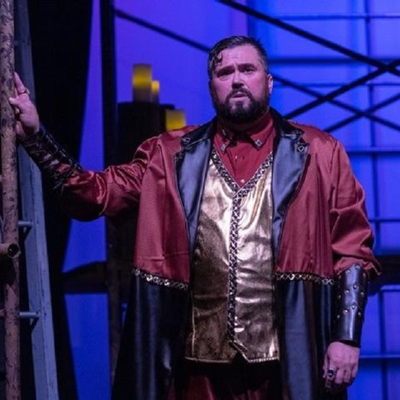

Want to be featured on this page? Update your credits.
Songs
Showing 8 of 24 songs
A song with an asterisk (*) before the title indicates a dance number.
Themes, Symbols & Motifs
THEMES
Power and Fame
The theme of power and fame is central, portraying Jesus's rising popularity as a double-edged sword that corrupts his original message of spiritual humility and transforms him into a "superstar" idolized by the masses, much like a modern rock icon. This shift is evident from the outset in "Heaven on Their Minds," where Judas laments how the movement's hype distracts from Jesus's teachings, turning philosophy into spectacle and inviting Roman scrutiny that
to read about the themes, symbols and motifs from Jesus Christ Superstar and to unlock other amazing theatre resources!Quote Analysis
"Listen, Jesus, I don't like what I see. All I ask is that you listen to me. And remember, I've been your right hand man all along."
Judas Iscariot; Act: 1 (from "Heaven on Their Minds")
This opening plea encapsulates Judas's role as the voice of pragmatic dissent, highlighting the theme of betrayal rooted in genuine concern rather than malice; by positioning himself as Jesus's loyal confidant, Judas underscores the tragic irony of his eventual actions, framing the entire narrative as a
to read our analysis of select quotes from Jesus Christ Superstar and to unlock other amazing theatre resources!Key Terms
The antagonist is a character who opposes the protagonist and creates conflict within the story. They are not always villains but are critical to the development of dramatic tension.
A powerful, resonant singing technique used in musical theatre to project high notes with chest voice.
A vocal register that allows singers to reach notes higher than their normal range, used for special effects or characterizations.
A character or voice that tells part of the story, offering commentary or background. Narrators are frequently used in children’s theatre and epic productions.
The main character of a play or story, typically the one whose journey or conflict drives the plot. The protagonist often experiences growth or change.
A musical work with rock music that tells a dramatic story, often sung-through and adapted for stage or screen.

