
Overview
Synopsis
The year is 1958, and the much-adored rock-and-roll idol -- Conrad Birdie -- has been drafted into the US army. His songwriter and agent, Albert, and Albert’s secretary and some-time girlfirend, Rosie, hatch a plan for a farewell performance to take place on The Ed Sullivan Show, which they hope will help sell Birdie’s new song “One Last Kiss,” and ultimately save Almaelou records from going under. To cap off the performance, Birdie will actually give ‘one last kiss’ to Kim MacAfee, an avid member of the Conrad Birdie fan club from Sweet Apple, Ohio.
When Albert and Rosie head to Sweet Apple to prepare for Birdie’s arrival, things start to unravel. Kim’s father is starstruck at the thought of being on The Ed Sullivan Show with his daughter, and Kim’s new steady, Hugo gets jealous at the thought of Kim kissing Conrad on national television.
Show Information
Context
Bye Bye Birdie was originally titled Let’s Go Steady and billed as a “happy teenage musical with a difference.” Conceived by producer, Edward Padula, who contracted Charles Strouse and Lee Adams. The team eventually sought out Gower Champion as a director/choreographer. Champion did not like the book and the writers were fired. Michael Stewart, who was then brought on, wrote an early version focusing on a couple thinking of divorce. However, Champion wanted something different. It was then
to read the context for Bye Bye Birdie and to unlock other amazing theatre resources!Plot
Act One
As the overture begins, video plays with footage of Conrad, cutting to rapid shots of mobs of screaming fans, climaxed by a shot of Conrad himself: sideburns, wild hairdo, half-closed eyes, pouting lower lip and all. From within the orchestra, we hear the anthem of Conrad’s fanclub: “We love you Conrad. Oh yes we do! We love you Conrad, and we’ll be true.”
At the office of Almaelou Music Corporation in New York, Albert Peterson is excitedly talking on the phone. His star
to read the plot for Bye Bye Birdie and to unlock other amazing theatre resources!Characters
Showing 8 of 29 characters
Character Portrayals
See StageAgent members who have performed roles in Bye Bye Birdie.
Showing 8 of 100 portrayals

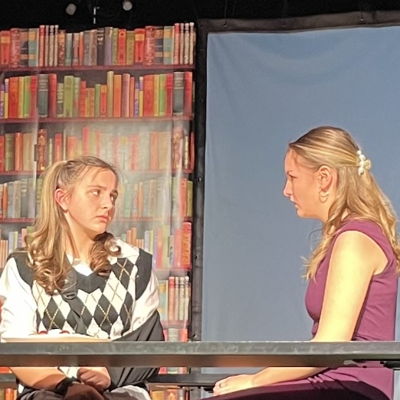

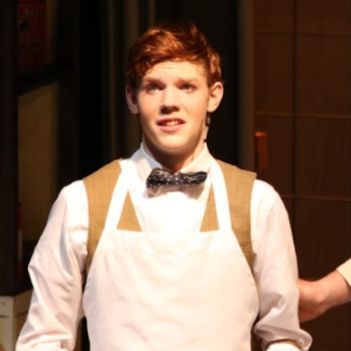

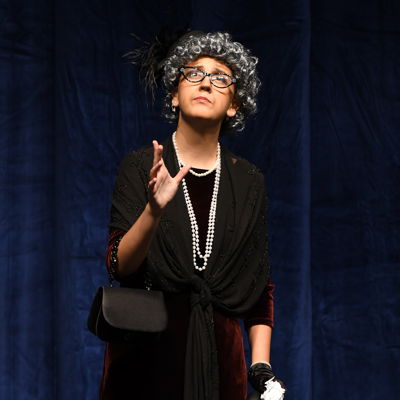


Want to be featured on this page? Update your credits.
Monologues
Songs
Act One
- “We Love You, Conrad” - Teen Chorus
- “An English Teacher” - Rosie Alvarez
- “The Telephone Hour” - Helen, Nancy, Alice, Margie, Harvey Johnson, Teen Chorus
- “How Lovely to Be a Woman” - Kim MacAfee
- “We Love You, Conrad” - Teen Trio
- “Put On a Happy Face” - Albert Peterson and Two Sad Girls
- “Normal American Boy” - Rose Alvarez, Albert Peterson and Chorus
- “One Boy” - Kim MacAfee, Deborah Sue and Alice
- “One Boy - Reprise” - Rosie Alvarez
- “Honestly Sincere” - Conrad Birdie and Townspeople
- “Wounded” - Ursula, Margie, Deborah Sue
- “Hymn for a Sunday Evening” - Mr. MacAfee, Mrs. MacAfee, Kim MacAfee, Randolph MacAfee
- *“One Hundred Ways - Ballet” - *Rosie
- “One Last Kiss” - Conrad and Company
Act Two
- “What Did I Ever See in Him?” - Rose Alvarez and Kim MacAfee
- “What Did I Ever See in Him? - Reprise” - Rosie Alvarez
- “Kids” - Mr. MacAfee and Mrs. MacAfee
- “A Lot of Livin’ to Do” - Conrad Birdie, Kim MacAfee and Teenagers
- “Baby, Talk to Me” - Albert Peterson and Quartet
- *“Shriners’ Ballet” - *Rose Alvarez and the *Shriners
- “Kids - Reprise” - Mr. MacAfee, Mrs. MacAfee, Randolph and Townspeople
- *“Ice House Livin’” - *Teen Chorus
- “Spanish Rose” - Rose
- “Rosie” - Albert and Rose
A song with an asterisk (*) before the title indicates a dance number; a character listed in a song with an asterisk (*) by the character's name indicates that the character exclusively serves as a dancer in this song, which is sung by other characters.
Key Terms
A period of artistic flourishing, often referring to 1940s-60s Broadway or English Renaissance theatre. This term plays a vital role in understanding theatrical structure and is commonly encountered in stagecraft or performance settings.
The “Golden Age Musical” refers to Broadway shows written roughly between the 1940s and 1960s, a period known for integrating songs, story, and character development. These musicals often balanced romance, comedy, and social themes with memorable melodies and large ensembles. Classics from this era continue to shape the foundation of modern musical theatre.
Rock and roll is a musical genre that originated in the United States in the 1950s, combining rhythm and blues with country and gospel influences. Characterized by strong beats, electric guitars, and youthful energy, it quickly became a symbol of rebellion and change. In theatre, rock and roll often represents social upheaval, generational conflict, and the rise of new cultural voices.